

Trouver du matériel par environnement opérationnel
Les exigences en matière de manutention varient selon les environnements opérationnels. Un entrepôt qui traite 500 palettes par jour doit relever des défis différents de ceux d'une réserve de magasin qui reçoit 50 références. Ce centre de ressources vous aide à trouver l'équipement adapté à votre cas d'utilisation spécifique.
Pourquoi les cas d'utilisation sont importants pour le choix du matériel
Les performances des équipements de manutention varient selon le contexte opérationnel. Un transpalette d'une capacité de 2 270 kg (5 000 lb) peut être optimal pour un centre de distribution, mais surdimensionné pour un petit commerce de détail. De même, les besoins en autonomie des batteries diffèrent considérablement entre les installations fonctionnant par équipes fixes et celles fonctionnant 24 h/24 et 7 j/7.
En sélectionnant d'abord votre cas d'utilisation, vous pouvez vous concentrer sur un équipement validé pour vos contraintes opérationnelles spécifiques plutôt que de passer en revue des options conçues pour différents environnements.
Parcourir par cas d'utilisation
Sélectionnez votre environnement opérationnel pour consulter les recommandations d'équipement adaptées à vos besoins spécifiques.
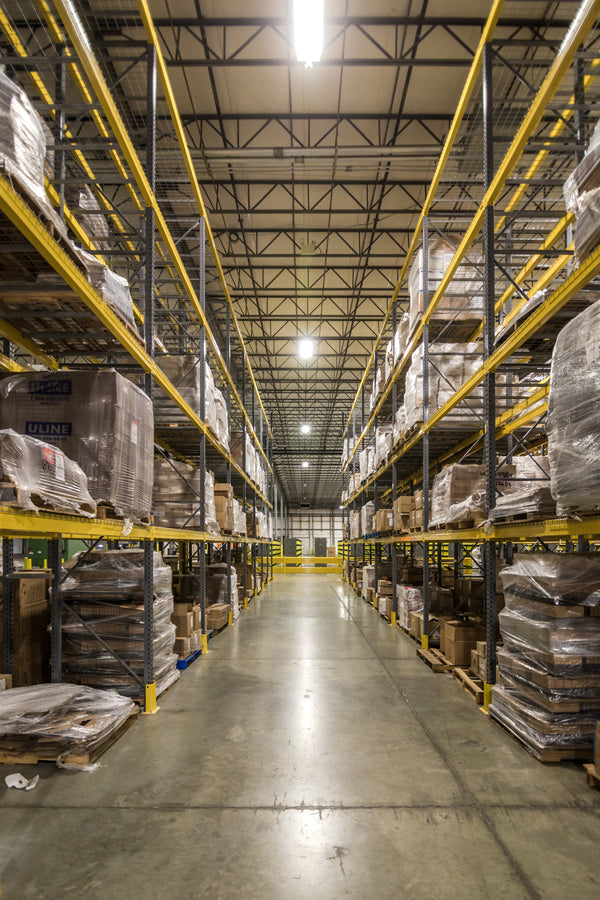
Entreposage
Équipements pour centres de distribution et entrepôts gérant le déplacement de volumes importants de palettes sur de grandes surfaces.
Explorer
Logistique et livraison
Solutions pour les quais de chargement, les opérations de transbordement et les installations de livraison du dernier kilomètre avec des cycles fréquents de chargement/déchargement de camions.
Explorer
usines de fabrication
Équipements pour la circulation des matériaux en atelier de production, la livraison en bord de ligne et le déplacement des produits en cours de fabrication dans les environnements de production.
Explorer
Arrière-boutiques de vente au détail
Équipement compact pour les zones de stockage de vente au détail avec des allées étroites, la gestion de références mixtes et des exigences de débit plus faibles.
ExplorerComment réfléchir au choix du matériel
Commencer par les contraintes opérationnelles
Avant de comparer les spécifications des équipements, identifiez vos principales contraintes : surface au sol, exigences de débit, horaires de travail et facteurs environnementaux. Ces contraintes permettent de restreindre vos options plus efficacement que la simple comparaison des fonctionnalités.
Prendre en compte le coût total de possession
Le prix d'achat ne représente qu'une partie du coût de l'équipement. Lors de l'évaluation des différentes options, il convient de prendre en compte la consommation d'énergie, les besoins d'entretien, la formation des opérateurs et la durée de vie prévue.
Adapter l'équipement au flux de travail
L'équipement le mieux adapté à vos flux de travail réels est essentiel. Observez la circulation des matériaux dans votre entrepôt avant de choisir un équipement conçu pour des flux différents.
Ressources pédagogiques
Guide d'achat des transpalettes électriques
Guide complet couvrant les capacités, les types de batteries et la comparaison de leurs caractéristiques.
ComparaisonTranspalettes manuels vs électriques
Quand choisir un équipement manuel plutôt que des alternatives motorisées.
ÉducationComprendre les cotes de capacité
Comment interpréter les spécifications de capacité de charge pour un fonctionnement en toute sécurité.