Use Case

Material Handling for Logistics & Delivery Operations

Logistics and delivery operations require compact, maneuverable equipment that functions efficiently in confined spaces including delivery trucks, narrow dock areas, and customer premises. Equipment must balance portability with sufficient power to handle diverse load types while enabling fast turnaround times at multiple stops.

Show now

Operational Challenges in Logistics & Delivery

Material handling constraints unique to multi-stop delivery operations and last-mile logistics.

Truck Bed and Trailer Access

Standard pallet jacks must fit inside delivery trucks and trailers with limited deck space. Fork dimensions and overall width determine whether equipment can operate effectively in confined truck interiors.

Multiple Daily Stops

Route delivery operations may include 15-30 stops per day. Equipment must handle frequent load/unload cycles without battery depletion and provide quick operation to maintain delivery schedules.

Variable Customer Premises

Delivery destinations include loading docks, ground-level entries, narrow doorways, and stairways. Equipment selection must account for the least accessible delivery points on routes.

Weight and Portability

Some last-mile deliveries require carrying equipment up stairs or over thresholds. Equipment weight affects both transport vehicle capacity and manual handling when power operation is not possible.

Recommended Equipment for Logistics

Compact, portable equipment designed for delivery trucks, varied customer premises, and high daily stop counts.

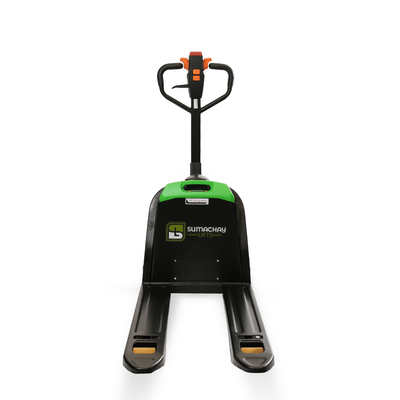
Transpalette électrique SESR15-N - Fourche étroite (21" x 47")

Transpalette électrique SESR15-N - Fourche étroite (21" x 47")

Narrow 21" x 47" fork dimensions fit inside delivery trucks and through standard commercial doorways. Compact design enables operation in confined spaces typical of last-mile delivery.

View Product
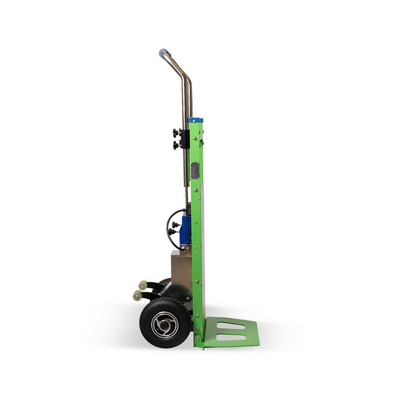
Monte-escalier électrique SC203L – Capacité de 200 kg, châssis autoportant en aluminium – Livraison gratuite

Monte-escalier électrique SC203L – Capacité de 200 kg, châssis autoportant en aluminium – Livraison gratuite

Electric stair climbing capability eliminates manual carrying on multi-story deliveries. 180 kg capacity handles appliances, furniture, and heavy parcels safely on residential and commercial stairs.

View Product
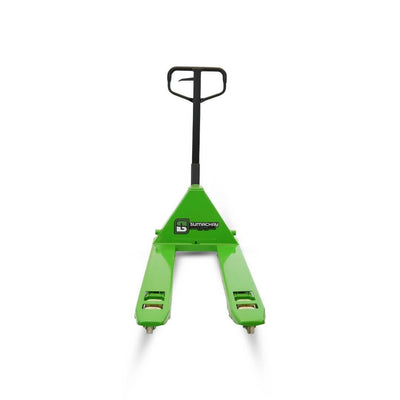
Transpalette manuel étroit SH20N

Transpalette manuel étroit SH20N

Lightweight manual backup option for locations where electric equipment cannot access. Narrow fork design works in tight spaces when battery power is not available.

View Product

How to Choose Equipment for Logistics Operations

Equipment selection for logistics and delivery depends heavily on route characteristics and delivery point requirements.

Delivery Vehicle Compatibility

Measure truck bed interior dimensions and tailgate lift capacity. Narrow-fork pallet jacks (21" width) fit standard sprinter vans and box trucks. Consider equipment weight against vehicle payload limits.

Route Composition Analysis

Assess the percentage of stops requiring dock access versus ground-level delivery. For routes with 30%+ non-dock deliveries, stair climbing equipment may provide significant time savings.

Daily Stop Count

High stop-count routes (20+ daily) benefit from lithium-ion batteries that support opportunity charging during loading. Lead-acid batteries may not sustain full-day operation without swapping.

Customer Premise Access

Survey typical delivery destinations for doorway widths, stair counts, and floor surfaces. Equipment that cannot reach the final delivery point creates manual handling requirements and increases injury risk.

When Logistics Equipment May Not Be Suitable

Compact logistics equipment may not meet your operational requirements if:

  • Loads regularly exceed 1,500 kg — standard delivery equipment prioritizes portability over heavy-lift capacity
  • Most deliveries use loading docks with no ground-level or stair access required — standard warehouse equipment may be more cost-effective
  • Routes include unpaved surfaces, gravel yards, or outdoor areas with significant grade changes
  • Delivery vehicles are full-size semi-trailers where standard warehouse equipment operates more efficiently
  • Same equipment must also perform warehouse duties — hybrid requirements may justify separate fleet allocation

Canada Delivery Specifications

Equipment ships from Toronto and Vancouver distribution centers. All models meet Transport Canada requirements for commercial vehicle use. Lithium batteries are certified for air and ground freight.