

Production Line Integration
Material handling equipment must deliver components to workstations at consistent intervals. Equipment downtime directly impacts production output and can halt entire manufacturing lines.
Manufacturing environments require material handling equipment that supports production workflows with predictable uptime, handles raw materials and finished goods with varying weights and dimensions, and operates safely in facilities with specific regulatory requirements. Equipment must integrate with production schedules and handle industrial-grade duty cycles.
Shop nowMaterial handling requirements driven by production schedules, heavy loads, and continuous operation.
Material handling equipment must deliver components to workstations at consistent intervals. Equipment downtime directly impacts production output and can halt entire manufacturing lines.
Manufacturing inputs include steel, castings, and bulk materials that may exceed typical warehouse weights. Equipment must handle 2,000+ kg loads repeatedly without strain or excessive maintenance.
Plants running 2-3 shifts require equipment that operates 16-24 hours daily. Battery technology and charging infrastructure determine whether equipment can support continuous operation.
Manufacturing floors may include metal shavings, oil residue, or uneven surfaces from embedded equipment. Wheels and drive systems must tolerate industrial floor conditions.
Industrial-grade equipment designed for heavy-duty cycles, multi-shift operation, and production line integration.
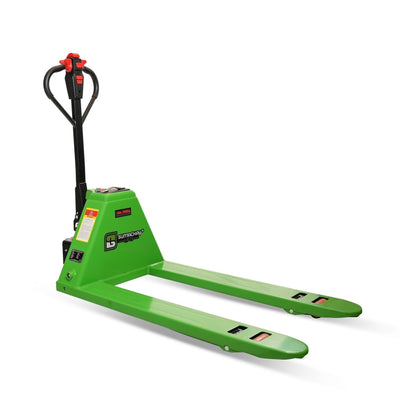
Heavy-duty 2-ton capacity handles raw materials and finished goods common in manufacturing. Lithium-ion battery supports multi-shift operation with opportunity charging between production cycles.
View Product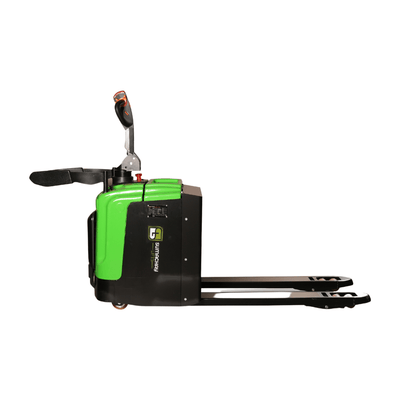
3-ton capacity ride-on design reduces operator fatigue during long shifts. EPS steering and platform operation enable efficient material flow across large manufacturing facilities.
View Product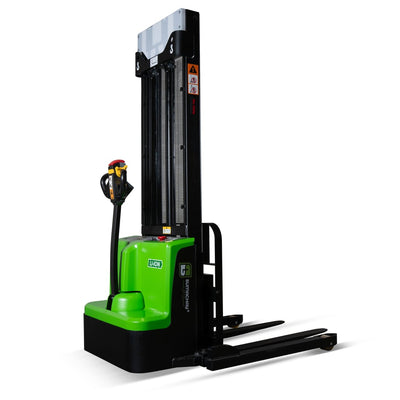
Vertical storage capability for work-in-progress and raw material staging. 3.5-meter lift height services standard industrial racking in production areas.
View ProductManufacturing equipment selection requires matching duty cycle requirements with equipment durability and capacity.
Calculate total pallets moved per shift and hours of operation. Equipment rated for continuous duty cycles (100% duty cycle) supports manufacturing environments where lighter-duty warehouse equipment would fail prematurely.
Analyze the range of loads handled — raw materials often weigh more than finished goods. Select equipment capacity for your heaviest regular loads, not average loads.
Single-shift operations can use opportunity charging during non-production hours. Multi-shift facilities need lithium-ion batteries with fast charging or multiple battery packs for swap-out operation.
Inspect floor conditions throughout production areas. Polyurethane wheels handle light debris and smooth surfaces. Rubber wheels provide better traction on contaminated or uneven floors.
Map material flow from receiving through production to shipping. Equipment specifications should support the most demanding segment of this flow path.
Standard material handling equipment may require specialized alternatives if:
Complete guide to capacity ratings, battery technology, and industrial specifications.
Use CaseMaterial handling solutions for high-volume distribution and storage facilities.
CollectionBrowse electric stackers for vertical storage and production line staging.
Browse our industrial-grade material handling equipment, or contact our specialists for a recommendation based on your production requirements.